
By Zen Honeycutt, Kendall Mackintosh, and Triada World science advisors
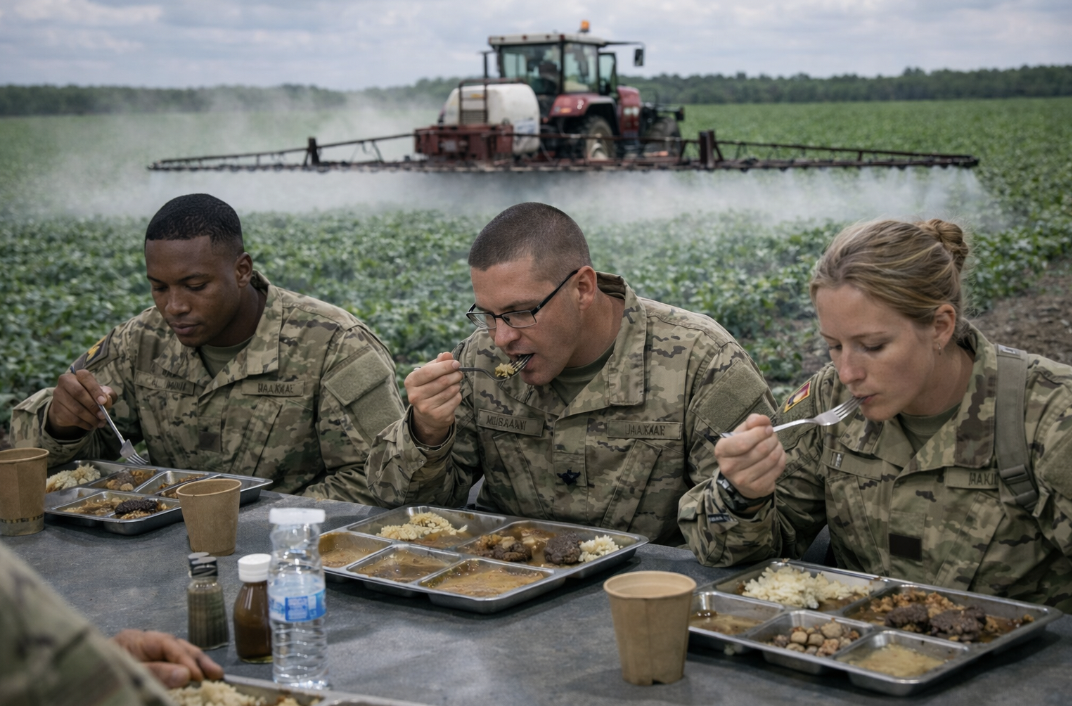 On febrero 4, 2026, Moms Across America (MAA) issued our Military Food Test Results exclusively to ABC. After the broadcast, a nutritionist identified a conversion error in the analysis, revealing that the information we released was inaccurate. We apologize to ABC, the public, and the military for this error. Corrections to our methodology have been made, and the following updated analysis has been reviewed by multiple nutritionists and scientists and is accurate.
Moms Across America is fueled by the dedication of mothers who have shared anecdotal experiences for over 13 years regarding our own children’s health issues. Their experiences, such as the vast improvements in their children's health when they eat organic food and avoid toxins, are valid and essential for understanding how we can all improve our own health. However, it is critical to us that all of our work, our foundation, is also backed by high-quality, independent science.
The science gathered through nutritional testing of military food raises additional questions that must be addressed for military health and public safety, and as a matter of national homeland security.
RESUMEN
The dataset shows a clear, repeated pattern across all menus. Military entrées contain mineral levels that are consistently and often dramatically higher than United States Department of Agriculture (USDA) baselines for comparable foods. The pattern is not random; it reflects systematic mineral-synthetic fortification and, in some cases, immense over‑fortification, particularly for sodium, manganese, calcium, iron, and copper.
- Of the available data on 9-10 minerals assessed across 10 samples, the military’s food nutrition was up to 25% higher than USDA-comparable standards.
- The military food samples were 40-60% higher in nutritional value than school lunches.
- Using synthetic fortification to address low nutrient density in school lunches is not advisable, as it can pose health risks.
- The need for any fortification highlights nutrient deficiencies in our food, perhaps due to agrochemical farming and the presence of glyphosate, a nutrient chelator found in, on average, 95%-100% of non-organic foods tested by MAA and up to 20% of organic food due to contamination.
- Minerals such as iron, sodium, calcium, manganese, and copper were at exceptionally high levels in many of the samples tested.
Link to laboratory report
Notable Results of Samples:
- Every military menu shows elevated mineral content relative to USDA norms, but the degree varies by entrée. Some meals are only modestly higher (1.1–1.4×), while others are 10-25× higher for specific minerals.
- Some military meals are closer to natural food patterns (e.g., Beef Stew, Chili), while others are clearly fortified (e.g., White Chicken Chunks, Applesauce, Ravioli).
- The mineral profile does not align with whole-food ratios. Natural foods maintain predictable relationships (e.g., zinc: copper ≈ 8:1, iron: copper ≈ 20:1). Military meals repeatedly break these ratios.
-
Sodium, manganese, iron, and copper are the most consistently inflated. These are the minerals that repeatedly exceed natural levels in food.
- The zinc-to-copper ratio should be ~8:1; many meals show 3:1, 2:1, or even 1:1.
- The iron-to-copper ratio should be ~20:1; some meals show 10:1 or 5:1.
- Manganese levels are significantly elevated across several menus (10–25×), which is concerning.
Scientist Lynn Yeoman, Ph.D. (Professor Emeritus, Baylor College of Medicine) Advisor, Triada World. a 501c3 - EIN: 86-1837841 stated regarding the test results, “A comparison of mineral levels in 10 military food samples with USDA-recommended levels for the same set of 9 minerals indicated that nearly all of the military food samples were over-supplemented from 2.5- to 25-fold in specific minerals. While over-supplementation can be troublesome whenever it is not necessary to address a specific malnutrition or malabsorption problem, we find the increased amounts for sodium, iron, and, in particular, copper to be excessive and potentially dangerous to military service member health."
This study of the nutritional composition of meals supplied to American military personnel, both civilian and uniformed services, was, at first glance, encouraging, as we found these meals represent a substantial improvement over what we have seen in children’s lunches across America. However, more improvement is needed. The primary approach used to improve the nutrient profile of these meals has been the use of synthetic minerals and occasional vitamins, despite growing evidence that synthetic forms may pose health risks.
As always, with nutrition, balance is essential. As we saw in this set of analyses, supplementation was consistently in excess of recommended daily allowances and, in apparently random instances, single nutrients were in huge excess. It is all too easy for synthetic mineral fortification to lose equilibrium through operator error or misunderstanding of nutritional requirements. Improving the diet by substantially increasing the share of farm-fresh organic and regenerative produce is a more effective and safe way to enhance the nutritional quality of meals for our soldiers.
Since these are the women and men whose mission is to ensure the security, safety, and well-being of our nation, it’s a matter of national security that their nutritional welfare be protected. We must ensure they receive food that enables them to consistently fulfill their mission to the nation with maximum effectiveness. If we can do this for our military, we should also do it for children attending schools nationwide. Earlier research conducted in collaboration with MAA found that school lunches in most American schools are of lower nutritional quality than current military meals. The nutritional content of these school lunches could also be viewed as a national security issue. We should ensure that school lunches provide all the nutritional building blocks necessary to enable our children to develop physically and cognitively, maturing into the creative, dynamic, strong adults essential to carry our nation forward.
Why is Fortification Potentially Dangerous? Isn’t It Better?
Most U.S. food‑fortification programs use inexpensive, inorganic mineral salts. These are not the forms found in whole foods and often have lower absorption and higher reactivity.
Calcium phosphate, ferrous sulfate, magnesium oxide, zinc oxide, and cupric sulfate all share an unmistakably industrial profile, with textures, solubilities, and reactivities that differ sharply from the food‑bound mineral forms found in whole ingredients. These synthetic salts generally deliver higher loads with lower biological benefit, resulting in greater gastrointestinal and metabolic strain and underscoring the need for formulation standards that prioritize bioavailability, safety, and alignment with natural nutrient ratios.
These forms are chosen because they’re inexpensive, shelf‑stable, and easy to blend, not because they’re biologically optimal. Many have low bioavailability, can compete with (block the absorption) of other minerals, and may oxidize fats or vitamins in the food matrix.
Synthetic Fortification:
A Scaled Problem Across Institutional Food Systems
Military rations exhibit extreme synthetic fortification, raising serious concerns about the biological effects of synthetic mineral overload. However, the problem is not limited to military food: school lunches are also fortified with the same problematic synthetic forms.
The critical concern is that school-age children, with smaller bodies, developing systems, and lower metabolic capacity, are consuming synthetically fortified meals daily during critical periods of growth and neurodevelopment. While military rations show the extreme end of synthetic fortification (designed for adult soldiers in high-stress environments), school lunches represent chronic, long-term exposure to the same synthetic nutrient forms in developing populations who may be even more vulnerable to the compounding metabolic consequences: nutrient interference, oxidative stress, unmetabolized compounds in circulation, and potential genomic disruption.
Both systems rely on inexpensive, poorly bioavailable synthetic salts chosen for cost and shelf stability, not for biological optimization. The scale differs, but the fundamental problem is identical: synthetic fortification is being used as a substitute for nutrient-dense chemical free whole foods in populations that deserve better. Military personnel face overfortification; schoolchildren face chronic exposure during development. Neither outcome is acceptable.
Carla Heiser, MS, LDN, FAAMFM, ABAAHP
Founder, Triada World
Military Food Compared to School Meals
Analyses by Kendall Mackintosh of 40 military ration/meal entrées also revealed notably higher mineral content (particularly magnesium, potassium, zinc, and iron) compared to school lunch and fast food samples due to excessive fortification. As outlined below, reliance on synthetic fortification can be associated with adverse health effects when nutrients are delivered in excessive or imbalanced amounts. Overall, these findings confirm that nutrient-dense, shelf-stable meal systems are scalable and present an opportunity to improve nutrition in America’s school lunches, provided these improvements are achieved through appropriate methods, such as regenerative organic food sourcing or modest, non-excessive use of high-quality, naturally derived nutrient additions.
1. Magnesium content is nearly 60% higher in military meals than in school lunches.
The highest magnesium value (0.14%) was found in Menu 4 - Spaghetti with Beef & Sauce (C of A S13527–S13532, Row “Magnesium (%)”), while the lowest (0.02%) appeared in Menu 2 - Shredded Beef. This 7x spread suggests significant fortification in some entrées. Compared with the MAA school lunch results, this represents nearly a 60% higher magnesium density in the top-performing military sample.
2. Potassium content was substantially higher than that of fast food and school lunch meals. The potassium content peaked at 1.10% in Menu 4 - Spaghetti with Beef & Sauce (S13527–S13532) and was lowest at 0.13% in Menu 2 - Shredded Beef.
That’s an over 8x difference within military samples, with the top-performing entrée delivering ~40% more potassium than the highest levels reported in school lunches or fast food.
3. Zinc levels were 500-600% higher in fortified entrées.
The highest zinc reading was 62.1 ppm in Menu 3 - Chicken with Noodles (S13527–S13532), and the lowest was 4 ppm in Menu 1 - Chili with Beans.
This represents a 15x range, with fortified chicken meals providing mineral levels well above those of standard institutional foods.
4. Iron content was significantly higher than that of typical institutional meals.Iron peaked at 48 ppm in Menu 3 - Chicken with Noodles (S13527–S13532) and bottomed at 4 ppm in Menu 1 - Chili with Beans. This 12x spread suggests inclusion of iron-rich ingredients in some meals. School lunch iron values averaged under 10 ppm, meaning top-performing military meals had nearly 5x greater iron density.
5. Sodium variability is a concern.
Sodium ranged from 0.32% (Menu 2 - Shredded Beef) to 1.83% (Menu 3 - Chicken with Noodles). Although high sodium improves preservation, this range represents a 6x difference, with the upper end potentially excessive for daily consumption.
6. Potassium, Phosphorus, Magnesium
Meals such as Menu 4 - Spaghetti with Beef & Sauce and Menu 6 - Beef Taco (S13527–S13532) showed moderate to high levels of multiple essential minerals. Compared to the MAA fast-food and school-lunch studies, these balanced mineral ratios indicate superior nutrient and food quality.
7. Calcium and sulfur are low, but stable. Calcium remained low across most samples (max 0.28% in Menu 4 - Spaghetti with Beef & Sauce), and sulfur was moderate (max 0.82% in Menu 3 - Chicken with Noodles). These stable levels indicate good amino acid sources but suggest potential for improvement in bone-supporting nutrients, such as calcium.
Investigator of the project, MAA founder Zen Honeycutt, stated, “We were initially excited to see higher levels of nutrients in military food because this means better nutrition is possible, and perhaps school nutrition could be elevated to 'military grade' nutrition. However, health concerns about synthetic fortification need to be addressed before such efforts are made.
The question this preliminary study raises is: fortifying food the answer? Is it problematic for developing children? (i.e., folic acid in tortillas) Or can we achieve higher nutrition through regenerative organic agriculture? Instead of using synthetic fortification, we could ensure that vegetables harvested from our farming systems contain natural folate.”
 What we learned from the military food mineral testing is that school meals can be much better enriched and balanced. Military meals have potential issues with over-fortification, especially with synthetic mineral salts
Kendall Mackintosh, MS, CNS, LDN, Board-Certified Nutrition Specialist & Licensed Dietitian Nutritionist
An earlier version of this document included preliminary interpretations made before the military nutrient data were corrected and fully reviewed. Following identification of a conversion error and subsequent multi-expert review, this analysis has been updated to accurately reflect the laboratory findings.
This corrected analysis sharpens, not weakens, the question raised by this study: should fortification remain the primary strategy for improving institutional nutrition, or should greater investment be made in food systems that naturally deliver higher nutrient density through improved sourcing and regenerative, organic agricultural practices?
The conclusion is clear: scale is not the barrier.
This analysis suggests enhancing the review of mineral formulation, balance, and fortification practices within existing military food testing protocols to ensure long-term nutritional safety and tolerability for service members.
llamada a la acción
Ask the Trump Administration and DoW to budget and prioritize regeneratively and organically raised meat and organically grown American produce for US troops and American students as a national security issue!
Laboratory Testing Info
The Health Research Institute Laboratory, led by John Fagan, PhD, Chief Science Officer, coordinated nutrient testing.
Health Research Institute is an independent, nonprofit analytical laboratory specializing in advanced testing of food, soil, water, and biological samples to evaluate nutrient density, contaminants, and environmental exposures. The Institute focuses on how agricultural practices, processing methods, and environmental conditions influence human health outcomes, with a mission centered on scientific transparency, public‑interest research, and accessible testing for communities, farmers, and health practitioners.
Dirección
Health Research Institute
505 E. Washington Street
Fairfield, Iowa 52556 USA
Referencias
- Smith AD, Refsum H. Do we need to reconsider the desirable blood folate concentration in view of the risk of unmetabolized folic acid? Am J Clin Nutr. 2018;107(6):993‑994. doi:10.1093/ajcn/nqy080.
- Obeid R, Kasoha M, Kirsch SH, Munz W, Herrmann W. Concentrations of unmetabolized folic acid and primary folate forms in pregnant women at delivery and in umbilical cord blood. Am J Clin Nutr. 2010;92(6):1416‑1422. doi:10.3945/ajcn.2010.30186.
- Bailey RL, Mills JL, Yetley EA, et al. Unmetabolized folic acid and total folate concentrations in pregnant women in the United States. Am J Clin Nutr. 2010;92(2):343‑352. doi:10.3945/ajcn.2010.29668.
- Pfeiffer CM, Sternberg MR, Fazili Z, et al. Unmetabolized folic acid is detected in nearly all serum samples from U.S. children, adolescents, and adults. J Nutr. 2015;145(3):520‑531. doi:10.3945/jn.114.201210.
- Morris MS, Jacques PF, Rosenberg IH, Selhub J. Circulating unmetabolized folic acid and 5‑methyltetrahydrofolate in relation to anemia, macrocytosis, and cognitive test performance in American seniors. Am J Clin Nutr. 2010;91(6):1733‑1744. doi:10.3945/ajcn.2009.28671.
- Heaney RP, Dowell MS, Bierman J, Hale CA, Bendich A. Absorbability and cost effectiveness in calcium supplementation. J Am Coll Nutr. 2001;20(3):239‑246. doi:10.1080/07315724.2001.10719041.
- Karkkainen M, Lamberg‑Allardt C, Uusitupa M, et al. Effects of calcium carbonate and calcium citrate on calcium metabolism and bone turnover. Am J Clin Nutr. 2001;74(3):335‑342. doi:10.1093/ajcn/74.3.335.
- .Cancelo‑Hidalgo MJ, Castelo‑Branco C, Palacios S, et al. Tolerability of different oral iron supplements: a systematic review. Curr Med Res Opin. 2013;29(4):291‑303. doi:10.1185/03007995.2013.766597.
- Hurrell RF. Preventing iron deficiency through food fortification. Nutr Rev. 1997;55(6):210‑222. doi:10.1111/j.1753-4887.1997.tb06471.x.
- Firoz M, Graber M. Bioavailability of US commercial magnesium preparations. Magnes Res. 2001;14(4):257‑262.
- Ranade VV, Somberg JC. Bioavailability and pharmacokinetics of magnesium after administration of magnesium salts. Am J Ther. 2001;8(5):345‑357. doi:10.1097/00045391-200109000-00008.
- Ritz E, Hahn K, Ketteler M, Kuhlmann MK, Mann J. Phosphate additives in food—a health risk. Dtsch Arztebl Int. 2012;109(4):49‑55. doi:10.3238/arztebl.2012.0049.
- Calvo MS, Uribarri J. Public health impact of dietary phosphorus excess. Adv Nutr. 2013;4(6):542‑544. doi:10.3945/an.113.004002.
- Siani A, Strazzullo P, Giacco A, et al. Controlled trial of potassium chloride in mild hypertension. J Hypertens. 1987;5(6):641‑646.
- He FJ, MacGregor GA. Beneficial effects of potassium. BMJ. 2001;323(7311):497‑501.
- He FJ, MacGregor GA. A comprehensive review on salt and health and current experience of worldwide salt reduction programmes. J Hum Hypertens. 2009;23(6):363‑384. doi:10.1038/jhh.2008.144.
- Appel LJ, Frohlich ED, Hall JE, et al. The importance of population‑wide sodium reduction as a means to prevent cardiovascular disease and stroke. Hypertension. 2011;57(4):639‑643. doi:10.1161/HYPERTENSIONAHA.110.165449
- Wuehler SE, Peerson JM, Brown KH. Use of zinc oxide in fortification of cereal‑based foods in developing countries. Food Nutr Bull. 2005;26(4):412‑422. doi:10.1177/156482650502600408.
- Sian L, Mingyan X, Miller LV, et al. Zinc absorption and intestinal losses in young Chinese women consuming a low‑zinc diet. Am J Clin Nutr. 1996;63(3):348‑353. doi:10.1093/ajcn/63.3.348.
- Brown KH, Peerson JM, Rivera J, Allen LH. Effect of supplemental zinc on the growth and serum zinc concentrations of prepubertal children: a meta‑analysis. Am J Clin Nutr. 2002;75(6):1062‑1071. doi:10.1093/ajcn/75.6.1062.
- Araya M, Olivares M, Pizarro F, et al. Gastrointestinal symptoms and blood indicators of copper load in apparently healthy adults undergoing controlled copper exposure. Environ Health Perspect. 2001;109(10):1001‑1006. doi:10.1289/ehp.011091001.
- Turnlund JR. Human whole‑body copper metabolism. Am J Clin Nutr. 1998;67(5 Suppl):960S‑964S. doi:10.1093/ajcn/67.5.960S.
-
Aschner JL, Aschner M. Nutritional aspects of manganese homeostasis. Mol Aspects Med. 2005;26(4‑5):353‑362. doi:10.1016/j.mam.2005.07.003.
- Greger JL. Dietary standards for manganese: overlap between nutritional and pq. toxicological studies. J Trace Elem Exp Med. 1999;12(4):291‑297. doi:10.1002/(SICI)1520-670X(1999)12p11:4<291::AID-JTRA3>3.0.CO;2-2.




Mostrando 1 reacción
Inicia sesión con