
Data centers form the physical backbone of artificial intelligence, cloud computing, and our modern digital lives. And around the world, their footprint is expanding at an unprecedented pace. What often appears as an abstract technological shift is, in reality, a deeply physical transformation of land, water systems, energy grids, and local communities.
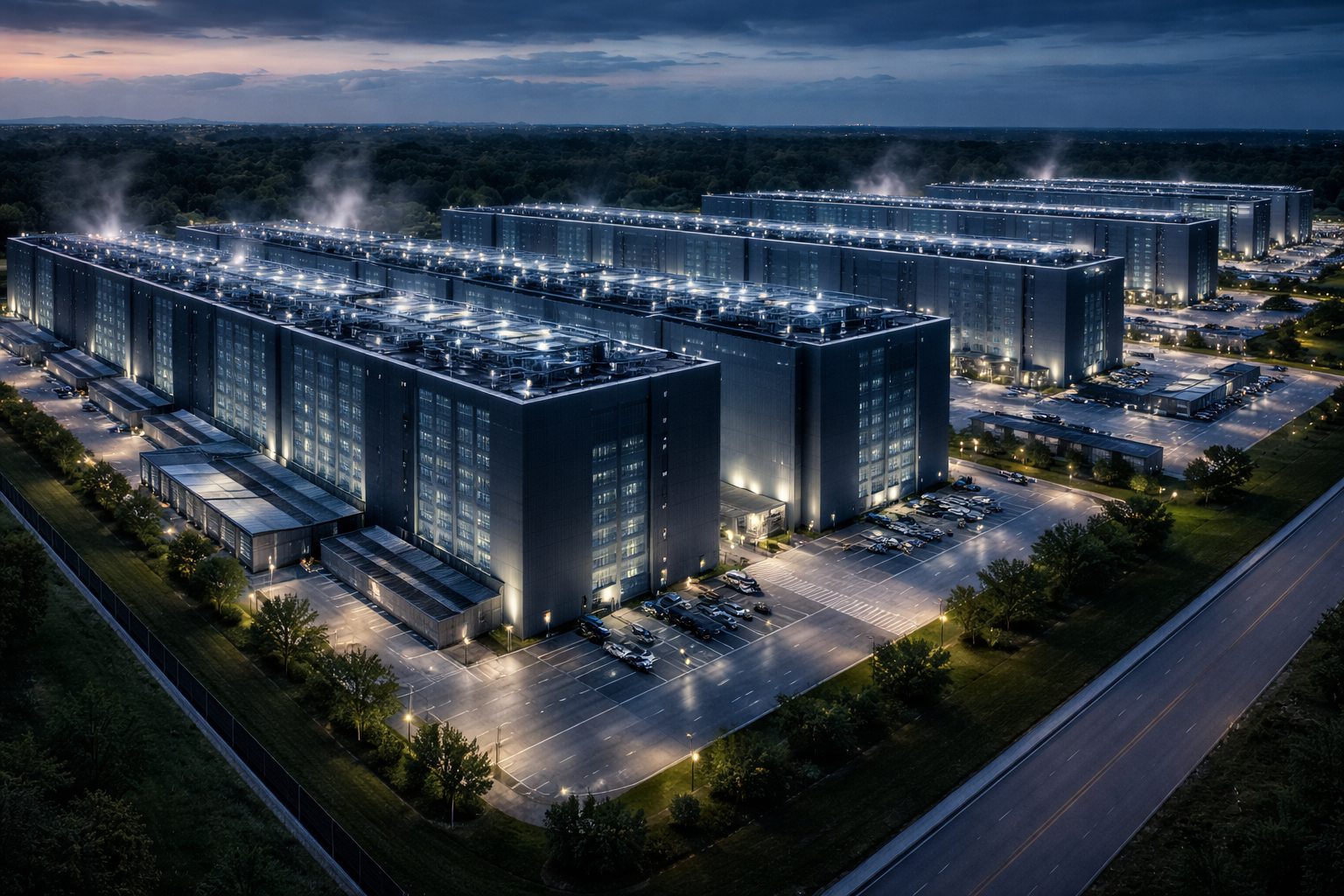
As this wave of new data center facilities rises across the country, communities are beginning to ask a simple question: What does this digital infrastructure actually cost us?
The Scale of the Build-Out
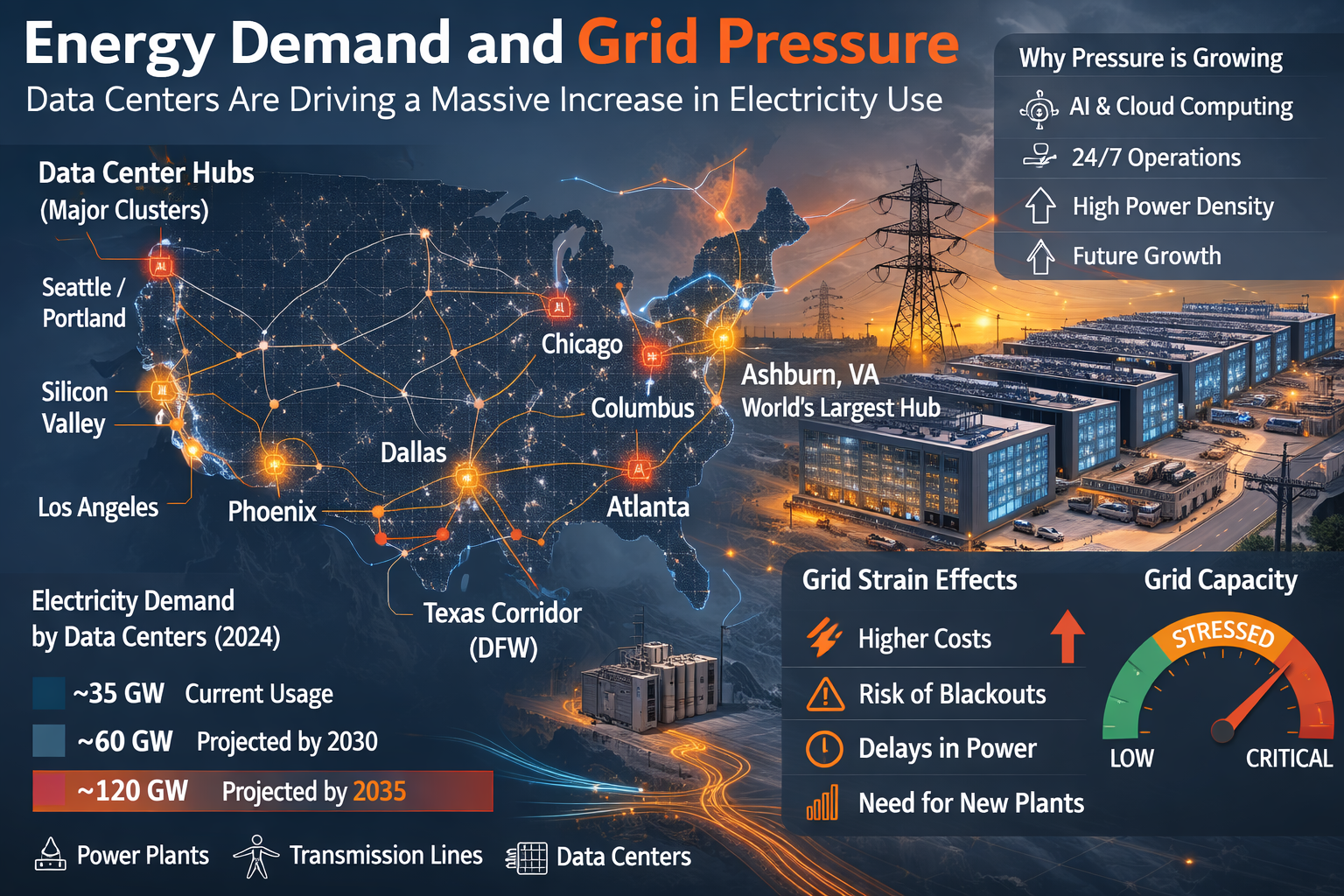
The United States is already home to more than 3,500 data centers, including hundreds of hyperscale facilities that are especially resource-intensive. But what exists today is only part of the story. Industry tracking indicates that nationwide, thousands more facilities are currently planned, under construction, or in advanced stages of development. And a recent analysis highlighted by the World Resources Institute reveals a striking geographic concentration: 60% of U.S. data centers are located in just 10 states. This clustering is not random. It reflects proximity to fiber networks, power availability, tax incentives, and favorable land-use policies. But it also means the environmental burdens of this infrastructure are falling disproportionately on certain regions.
According to the latest data (via Data Center Map), the top states hosting U.S. data centers are:
- Virginia - 566
- Texas - 391
- California - 287
- Illinois - 195
- Georgia - 195
- Ohio - 194
- Arizona - 146
- New York - 133
- Oregon - 121
- Florida - 107
Northern Virginia remains the world’s largest data center hub, often called “Data Center Alley,” with more than 300 operational facilities concentrated in just four counties. Texas is also rapidly expanding its data center portfolio; in the corridor between Temple and San Antonio alone, at least 55 centers are built or in development, underscoring how quickly this infrastructure is spreading beyond traditional tech hubs. And globally, the expansion is expected to continue accelerating. According to recent estimates from Goldman Sachs, global power demand from data centers could rise by as much as 165% by the end of this decade.
Data centers may power the modern digital economy, but their physical footprint is anything but virtual. In many regions, the speed of this expansion is already outpacing the frameworks meant to guide it, prompting communities to ask what this rapid build-out means for their natural resources and quality of life.
Water Demand and the Emerging “Water Bankruptcy” Risk
One of the most immediate pressures from the AI data center boom is water. Modern data centers generate enormous heat and must be continuously cooled. Many rely on evaporative cooling systems that consume large volumes of freshwater every day. A single hyperscale facility can use up to five million gallons of water daily, roughly equivalent to the daily water use of more than 15,000 households! And in the United States alone, data centers consumed an estimated 66 billion liters of water in 2023, with demand projected to rise alongside AI growth.
As new facilities are being proposed in water-stressed regions like Arizona and Texas, communities are raising questions about the impacts these data centers will have on their freshwater resources. And rightfully so: when local water systems are pushed toward their limits, households are often the first to feel the effects through higher prices and more stringent restrictions. But the impacts rarely stop at the tap. Agriculture accounts for roughly 70% of global freshwater withdrawals, meaning that prolonged water stress drives up food production costs, and ultimately grocery prices.
This surge in industrial demand for freshwater is also coinciding with a stark warning from the United Nations that the world is approaching conditions of “global water bankruptcy”. That is, a point at which demand for freshwater chronically exceeds supply. For communities already navigating aging infrastructure and/or seasonal water stress, the margin for error here is shrinking. If left unaddressed, the current trajectory could have profound consequences for all life on this planet.
The good news is that global water bankruptcy is not imminent. Prioritizing construction in water-abundant regions and areas with reclaimed-water infrastructure can lower risk. Additionally, more environmentally-friendly data center technologies, such as closed-loop and air-cooling systems, recycled or non-potable water use, and next-generation liquid immersion cooling can significantly reduce freshwater demand. However, some experts also caution that current water treatment and filtration infrastructure will require substantial upgrades to safely support these more efficient technologies.
Avoiding global water bankruptcy, however, will require far more than technology alone. Stronger regulation and transparency requirements, such as standardized water reporting, cumulative watershed impact reviews, and enforceable efficiency standards, will also be critical to ensure that rapid AI growth does not quietly outpace local water limits.
Energy Demand and Grid Pressure
Modern AI-ready data centers are also extraordinarily power-hungry, and electricity demand is quickly becoming another major pressure point. Energy experts and researchers project that electricity consumption from data centers is likely to more than double by 2030, driven largely by AI workloads and increasingly AI-intensive applications. A single large data center facility can draw as much electricity as tens or even hundreds of thousands of homes, and when multiple hyperscale campuses cluster in one region, the cumulative load on the local grid can become substantial.
To accommodate this surge of demand for electricity, utility companies are undertaking major infrastructure upgrades including reinforcing substations, expanding generation capacity, and building new transmission lines. These investments carry substantial costs and in many cases, they are incorporated into the company’s broader rate structure. This means that residential customers are shouldering the infrastructure upgrades being performed to serve the artificial intelligence industry. For instance, from junio 2023 to junio 2025, the average residential electricity prices in New Jersey rose well over 33%.
These implications are drawing growing scrutiny. However, there are pathways to reduce the strain on the average consumer’s electric bill. Advances in chip efficiency, improved thermal management, strategic demand response, and greater use of on-site and renewable energy can all help ease the consequences of increasing electricity demand. As with water systems, meaningful progress is going to depend on policy as much as technology. Proactive grid planning, transparent large-load review processes, and enforceable efficiency standards will be essential to ensure that the expansion of AI infrastructure does not outpace the capacity and affordability of our electricity grids.
“The Hum”, Land Use, and Local Quality-of-Life Impacts
While the digital economy may appear intangible, its physical infrastructure is anything but. Beyond water and electricity, many impacts of large data centers are felt in ways that are immediate and sensory. And unlike other industrial operations, data centers run 24/7. In communities near major data center campuses, some of the concerns being raised in local hearings include: a constant low-frequency noise (“the hum”), light pollution from round-the-clock operations, and heavy truck traffic during construction.
Some researchers and community groups have also raised questions about localized air quality impacts associated with large data center campuses, particularly from backup diesel generators that are periodically tested or used during grid outages. These generators can emit nitrogen oxides and particulate matter if operated frequently or clustered at scale. Advocates in several regions are now calling for more consistent health impact assessments and cumulative air monitoring to better understand potential long-term community exposure.
While individual facilities typically meet regulatory thresholds, residents in dense data center corridors say the cumulative effect of multiple campuses can meaningfully affect quality of life. Low-frequency noise in particular can travel long distances and penetrate buildings more easily than higher-pitched sounds, making it difficult for nearby households to avoid. Furthermore, while construction phases may bring temporary employment, many large data centers ultimately operate with relatively few permanent staff.
Hyperscale data center campuses can also span hundreds of acres, often converting forests, farmland, and open green space into highly secured industrial complexes. One of the less discussed consequences of large-scale land clearing is its impact on stormwater behavior.
Forested land naturally absorbs rainfall and slows runoff. Research from the U.S. Geological Survey and Environmental Protection Agency shows that urbanized areas with significant impervious surfaces (i.e. buildings, roads, parking areas) can generate two to six times more stormwater runoff than forested land. In some watersheds, localized flooding has increased by up to 100% or more following extensive development.
All of this raises serious questions about whether the long-term trade-offs are fully understood before municipal approvals for these facilities are granted. Noise and light pollution, habitat loss, and watershed management must become central considerations for communities weighing the pros and cons of welcoming these facilities into their neighborhoods.
The Equity Challenge
As awareness grows, some communities, particularly well-resourced suburbs, are organizing to slow or block new data center proposals. Civic engagement is, after all, a vital part of local governance. But a deeper and more disturbing systemic tension is beginning to surface.
If digital demand continues to surge while individual communities successfully push projects away, the infrastructure does not disappear… it relocates.
Researchers and environmental justice advocates increasingly warn that high-impact infrastructure often shifts toward:
- rural regions
- lower-income communities
- areas with fewer zoning protections
- water-stressed but economically vulnerable counties
In other words, opposing data centers in your community while continuing to rely heavily on AI-driven services risks unintentionally transferring environmental burdens onto more vulnerable populations.
This does not mean communities should accept harmful development. It means that the conversation must expand beyond “not in my backyard,” toward personal awareness, greater transparency, corporate accountability, smarter siting policies, and much higher efficiency standards.
As the AI build-out continues to accelerate, the central question is no longer simply where data centers should or should not be built, but how to ensure the benefits and burdens of the digital economy are being distributed across our communities.
What This Looks Like in Practice: How to Get Involved
“Once again, regarding the increase of data centers, American corporations are putting progress and profits before the health and safety of the American people and our environment. We urgently need two things: (1) Increased awareness of local zoning and allowance of data centers- Go to your town hall meetings! and (2) Immediate enactment of state-wide regulation that restricts the sprawl of data centers, especially near homes, nature reserves, waterways, and schools. The fact is that other countries have established safer solutions and it’s time for us to be innovative and responsible as well.”
– Zen Honeycutt, Founder & Executive Director, Moms Across America
If communities want a say in how these benefits and burdens are distributed, it will require coordinated action at the local, state, and federal levels. Here are three ways to get involved as this rapidly emerging issue unfolds:
1. Engage locally where key decisions are made
In most cases, decisions about whether a data center can be built are made close to home. Zoning approvals, site plans, and key permits are typically handled at the county or municipal level rather than in Washington, D.C., making local engagement one of the most powerful leverage points available to communities. This dynamic is already playing out in real time. In communities like Canton, North Carolina, and New Brunswick, New Jersey, organized local opposition has successfully led to the rejection of proposed data center developments, demonstrating the growing influence of community-level action.
Attending county commissioner, planning board, and town council meetings, requesting full public disclosure of projected water and electricity demand, and asking for cumulative impact analyses when multiple facilities are proposed can meaningfully shape outcomes. Early engagement is especially important, as community influence often narrows once projects reach late-stage approval.
2. Encourage stronger state and federal oversight
olicy frameworks are still catching up to the rapid expansion of AI infrastructure. In several states, including Virginia, Arizona, and Texas, lawmakers and regulators have begun examining data center energy use, water disclosure requirements, and grid impacts from these large-scale operations. For instance, Florida is now emerging as a leader in setting state policy around data center expansion. In febrero 2026, the Florida Senate advanced Senate Bill 484, a measure designed to establish a regulatory framework for large-scale data centers. The proposal would preserve local government authority over land-use decisions, require major facilities to cover the cost of their electric service, and impose new conditions on water permitting for large-load customers.
At the federal level, however, policy is increasingly oriented toward acceleration and the easing of regulatory barriers for industry. Agencies such as the Federal Energy Regulatory Commission (FERC), the Department of Energy, and the Environmental Protection Agency (EPA) are becoming more engaged in these issues. The White House’s AI Action Plan, the push to “win the 6G race,” and this recent national security memoranda all emphasize the need to rapidly expand U.S. digital and communications infrastructure. These initiatives frame AI capacity and advanced wireless networks as matters of economic competitiveness and national security.
While supporters argue this urgency is necessary for global leadership, critics and community advocates caution that fast-tracking large-scale infrastructure without equally robust guardrails risks overlooking cumulative impacts on human health and the environment. To some, the current administration’s speed-forward posture carries a familiar echo of earlier federal initiatives like Operation Warp Speed, in which rapid deployment was prioritized, sometimes ahead of, longer-term considerations.
Simultaneously, grassroots resistance efforts like Data Center Watch and the NAACP’s Stop Dirty Data Centers campaign are beginning to build nationwide momentum. Residents can also encourage their state legislators and members of Congress to support standardized reporting requirements, cumulative impact reviews, stronger efficiency standards, improved large-load grid planning, and stronger water transparency requirements so that infrastructure expansion proceeds with appropriate safeguards in place.
3. Use digital tools more consciously
Artificial intelligence may feel intangible but every query, generated image, and stored file runs through physical infrastructure that consumes water and energy. From excessive cloud storage to high-volume AI image generation and always-on automated systems, everyday digital habits scale quickly. More mindful use, combined with public pressure for corporate transparency and efficiency, can help ensure that the growth of AI infrastructure proceeds with greater awareness of its real-world footprint.




Showing 1 reaction
Sign in with